Six basic rules for enrichment
Everyone wants to give pupils who can do more something good. Yet it often goes wrong in the same ways. Recognise one?
He's done quickly, so he gets an extra worksheet.
Compact first, then enrich
Enrichment replaces work, it doesn't come on top. First cut what a pupil already knows: the instruction they don't need and much of the repetition. In the time that frees up, they do something that challenges them. Enrichment on top of the usual work feels like a punishment for doing well.
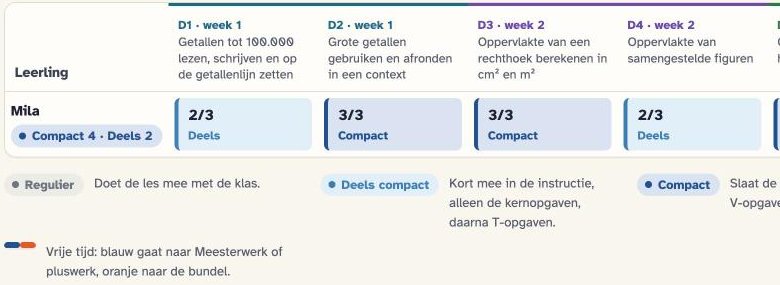 In tempono: The block's pre-test shows, per pupil and per lesson, what they can skip. You choose the route: partly compact, compact, or Compact+ with a bundle of their own.
She does the extra tasks from the method, and then more extra tasks.
The method's extra work isn't enough
The extra tasks in a textbook method are made for pupils who are a little faster. For the strongest pupils they are often still too easy, or more of the same. They need different work: broader and deeper, not next year's material.
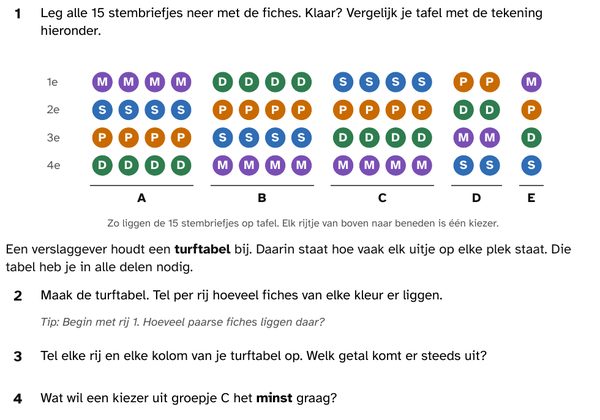 In tempono: Bundles follow your class's theme, with real problems to solve: measurements, tables, charts, games and puzzles. Broader and deeper, nothing from later years.
There's only enrichment in maths, because the method has something for it.
Broader than maths
Enrichment often starts with maths, but look at what a pupil needs. Some are strong at everything, others in language, or they have an interest of their own. Working on something that grips them keeps them going longer. Look at homework too, when it only repeats what already went well in class.
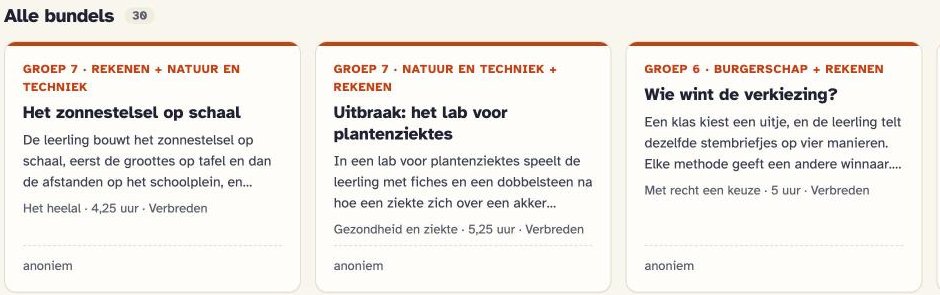 In tempono: A bundle is about what your class is working on, from the weather to elections. Your assistant makes one for any theme and any subject.
Whoever is done may take something from the enrichment cupboard. If they feel like it.
Not optional, but explained
Enrichment is part of what a pupil needs to learn, to persevere and to deal with mistakes. So it isn't a reward they can leave aside. Do tell them why: what they skip, and what they do instead. The more normal it is in your class that everyone gets what they need, the easier a pupil accepts it.
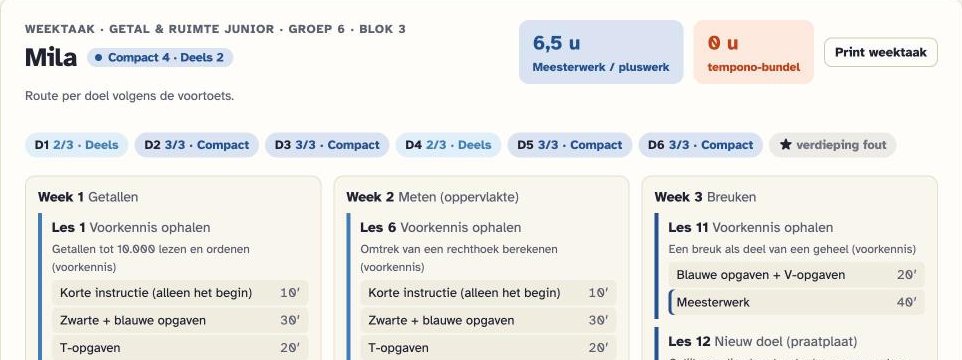 In tempono: The compacting plan shows which lessons a pupil skips and what they do in that time. That helps in the conversation with the pupil, and with their parents.
The enrichment notebook goes home at the end of the term, unseen.
Look back on it together
Enrichment work that nobody looks at loses its meaning. Check in along the way and give feedback on how a pupil tackles it, not only on the end result. A grade says little here: what matters is what they learned and where they got stuck.
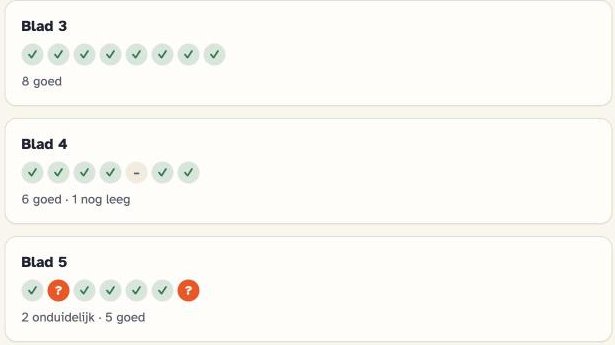 In tempono: Scan a sheet with your phone at the pupil's table. You see per task what is right, wrong or unclear, and open the steps in the teacher's guide straight away. Help, not a grade.
He sits alone in the corridor all afternoon with his extra task.
Not alone in a corner
Work a pupil can finish entirely alone is usually too easy. Young children especially need guidance: a short explanation first, and a quick chat along the way about how it's going. Learning is also learning together. If a pupil always works alone and wants to rejoin the group, discuss with your special needs coordinator whether acceleration fits better.
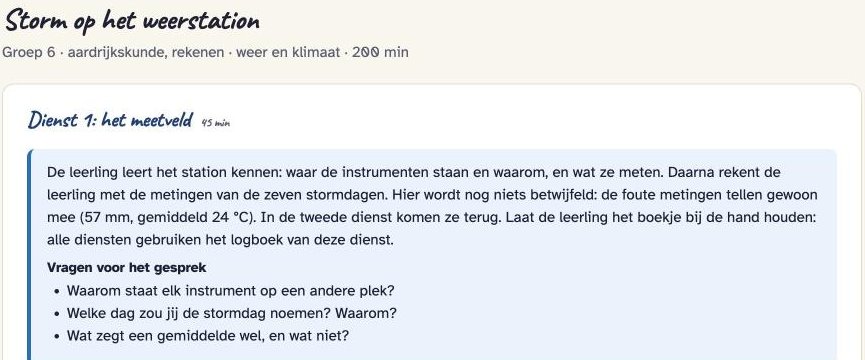 In tempono: The teacher's guide gives you, per part, a short explanation, stop moments and questions for the chat along the way. The teacher view puts them on your screen.
Further reading
These rules are based on Basistips voor verrijking (in Dutch) by Ilse Verhoeven on Hoogbegaan, with sources and a summary to download.
Want to try it?
tempono is in development. Do you have a few pupils who can do more? Ask for a place in the pilot, or first see what's in the library.