Why enrichment on paper
In tempono the pupil works on paper, in a printed booklet with a pen. You make and process it digitally. Not out of nostalgia: research shows that reading and learning on paper often go differently — and often better — than on a screen.
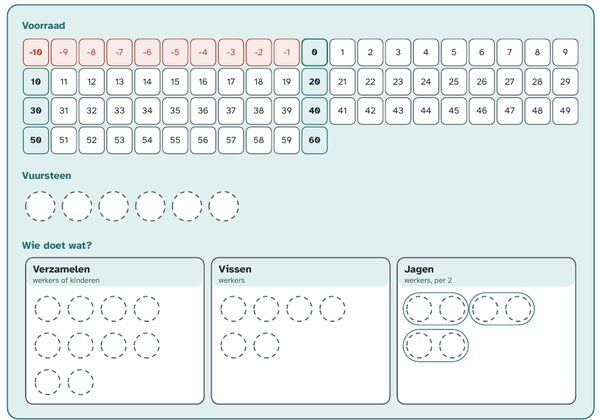
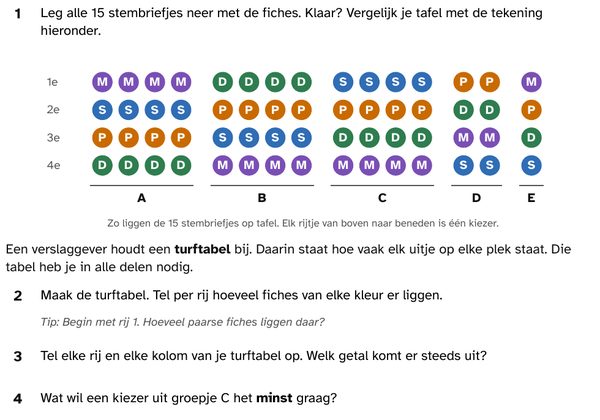
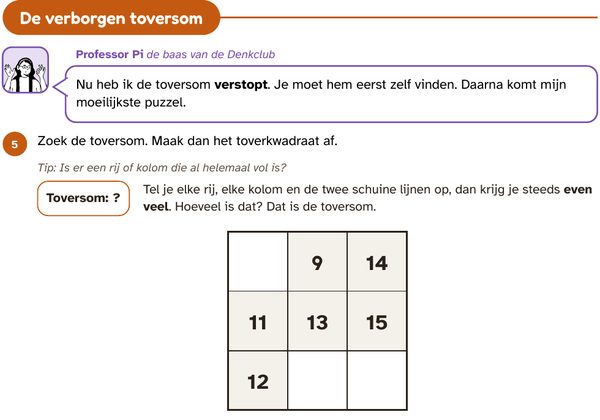
The pupil on paper, you digital
A screen is strong where work repeats or where speed counts. Enrichment is the opposite: one topic, a few weeks, thinking things through calmly. Paper suits that. So the pupil works in a booklet, with a pen. The sorting out, the making and the marking you do digitally — with your assistant, and with the scan. Paper where it helps the pupil, a screen where it helps you.
Reading comprehension goes deeper on paper
The strongest evidence comes from reading. A meta-analysis by Delgado and colleagues (2018), across 54 studies and more than 170,000 readers, found that reading comprehension is better on paper than on a screen — especially for informational texts and under time pressure. The explanation: on a screen we skim more readily, and we more often overestimate how well we understood something. Exactly where enrichment asks a pupil to really get to grips with a difficult text, that matters.
Writing by hand engages more of the brain
Writing by hand activates wider networks in the brain than typing. Van der Weel and Van der Meer (2024) measured with EEG that handwriting produces connectivity patterns linked to memory and learning; earlier, Askvik and colleagues (2020) saw the same in children. That doesn't prove higher grades, but it fits what writing does: you have to choose and order what you write down, and so process the material more actively.
Not everything is settled
To be fair: the well-known finding that handwritten notes stick better than typed ones (Mueller and Oppenheimer, 2014) came back weaker, or not at all, in later careful replications (Morehead and colleagues, 2019). So the picture is nuanced. That's why we choose paper where it demonstrably helps — in deep reading and writing by hand — and not everywhere on principle.
Less screen, more attention
A booklet gives no notifications and isn't open next to five tabs. In a randomised experiment at West Point (Carter and colleagues, 2017), students allowed a laptop or tablet in class scored lower on the final exam — about a fifth of a standard deviation — than students without one. For pupils who need to learn to persevere on something hard, that calm is worth a lot. More and more schools are deliberately choosing paper again: not to ban technology, but to pick what fits each thing.
Without the marking that paper used to mean
Paper always had a price: copying, and only seeing afterwards what a pupil could do. tempono removes that. You print a booklet with answer sheets in one go, and scan it back at the pupil's table: you see for each task straight away what is right, wrong or unclear, and open the steps in the teacher's guide. The good of paper, without the marking.
Sources
This is in the news too — schools choosing pen and paper again (RTL Nieuws, VRT on Sweden, both in Dutch) — but it rests on research:
- Delgado, Vargas, Ackerman & Salmerón (2018). Don't throw away your printed books: a meta-analysis on the effects of reading media on reading comprehension. Educational Research Review. pdf
- Van der Weel & Van der Meer (2024). Handwriting but not typewriting leads to widespread brain connectivity. Frontiers in Psychology. online — with Askvik, Van der Weel & Van der Meer (2020) on children.
- Mueller & Oppenheimer (2014). The pen is mightier than the keyboard. Psychological Science. online — and the replication by Morehead, Dunlosky & Rawson (2019), Educational Psychology Review. online
- Carter, Greenberg & Walker (2017). The impact of computer usage on academic performance: evidence from a randomized trial. Economics of Education Review. pdf
See also our six basic rules for enrichment.
Want to try it?
tempono is in development. Would you like enrichment on paper in your class? Ask for a place in the pilot, or first see what's in the library.